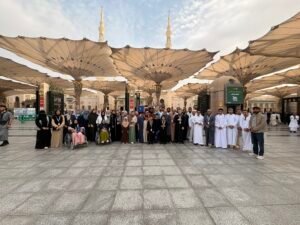
Once the intention to perform Umrah is made, as a first-time pilgrim, you begin the preparation process with enthusiasm and you may quickly encounter ambiguity and uncertainty due to varied information, differing opinions and an overwhelming number of sources of information
Information is often inconsistent because family advice, online videos and official guidance can feel overly technical and differ in detail. As a result, the planning phase itself may become stressful. This blog is here to provide you with clear, structured and reliable information for first-time pilgrims. It focuses on the essential steps, practical preparation and common mistakes to avoid.
What Is Umrah?
Umrah is a voluntary Islamic pilgrimage performed in the sacred city of Makkah. It is an act of worship that involves visiting the Holy Mosque (Masjid al-Haram) and performing a defined sequence of rituals in accordance with Islamic teachings.
Unlike Hajj, which is obligatory once in a lifetime for those who are capable, Umrah is not mandatory. However, it is highly meritorious and may be performed at any time of the year, except during the month of Dhul Hijjah.
Umrah holds profound spiritual value in Islam. It is regarded as a means of seeking forgiveness, purification of the soul and renewal of faith. It allows the pilgrim to detach from this temporary worldly life and focus entirely on worship and submission to Allah (ﷻ), highlighting the spiritual benefit and cleansing effect associated with performing Umrah.
Overview of the Umrah Process:
Umrah consists of four primary rituals performed in sequence:
- Entering the state of Ihram (State of Sacred Intention)
- Performing the Tawaf (Circumambulation of the Kaabah)
- Performing the Sa’i (Walking between Safa and Marwah)
- Completing the Halq or Taqsir (Shaving or Trimming the Hair)
Completion of these steps fulfills the rituals of Umrah.
Purpose of Umrah:
The primary objectives of Umrah include:
- Strengthening one’s relationship with Allah (ﷻ)
- Seeking forgiveness for past sins
- Demonstrating submission and humility before Allah (ﷻ)
- Following the Sunnah of the Prophet Muhammad (ﷺ)
- Experiencing spiritual renewal and self-reflection
Intention (Niyyah):
The intention is the foremost prerequisite for Umrah.
- The purpose of Umrah must be sincerely directed to Allah(ﷻ)
- The intention is made internally by heart and verbally by reciting the Talbiyah
- Spiritual focus should be established before travel arrangements and logistical planning. Hiring an Umrah Tour Operator will facilitate ease in your spiritual focus and logistical planning.
The principle is based on the narration of Hz. Umar ibn al-Khattab (ر):
عَنْ أَمِيرِ الْمُؤْمِنِينَ أَبِي حَفْصٍ عُمَرَ بْنِ الْخَطَّابِ رَضِيَ اللهُ عَنْهُ قَالَ: سَمِعْتُ رَسُولَ اللَّهِ صلى الله عليه وسلم يَقُولُ: ” إنَّمَا الْأَعْمَالُ بِالنِّيَّاتِ، وَإِنَّمَا لِكُلِّ امْرِئٍ مَا نَوَى، فَمَنْ كَانَتْ هِجْرَتُهُ إلَى اللَّهِ وَرَسُولِهِ فَهِجْرَتُهُ إلَى اللَّهِ وَرَسُولِهِ، وَمَنْ كَانَتْ هِجْرَتُهُ لِدُنْيَا يُصِيبُهَا أَوْ امْرَأَةٍ يَنْكِحُهَا فَهِجْرَتُهُ إلَى مَا هَاجَرَ إلَيْهِ”. رَوَاهُ إِمَامَا الْمُحَدِّثِينَ أَبُو عَبْدِ اللهِ مُحَمَّدُ بنُ إِسْمَاعِيل بن إِبْرَاهِيم بن الْمُغِيرَة بن بَرْدِزبَه الْبُخَارِيُّ الْجُعْفِيُّ [رقم: 1]، وَأَبُو الْحُسَيْنِ مُسْلِمٌ بنُ الْحَجَّاج بن مُسْلِم الْقُشَيْرِيُّ النَّيْسَابُورِيُّ [رقم: 1907] رَضِيَ اللهُ عَنْهُمَا فِي “صَحِيحَيْهِمَا” اللذَينِ هُمَا أَصَحُّ الْكُتُبِ الْمُصَنَّفَةِ.
It is narrated on the authority of Amirul Mu’minin, Abu Hafs Hz. ‘Umar bin al-Khattab (ر) who said: I heard the Messenger of Allah (ﷺ) say: “Actions are judged by motives (niyyah), so each man will have what he intended. Thus, he whose migration (hijrah) was to Allah and His Messenger (ﷺ), his migration is to Allah and His Messenger (ﷺ); but he whose migration was for some worldly things he might gain or for a wife he might marry, his migration is to that for which he migrated.”
[Sahih Bukhari & Sahih Muslim]
Travel Documentation and Requirements:
What about passport validity?
Minimum validity: Your passport should be valid for atleast 6 months from date of travel.
Will I require a specific type of visa?
You will need an Umrah Visa or a Tourist Visa (specific nationalities) or an on-arrival visa (specific nationalities & permanent residencies) to enter the Kingdom of Saudi Arabia to perform your Umrah. A licensed Umrah Tour Operator such as Umrah Lane can arrange one for you.
Are there any additional requirements?
Compliance with current travel regulations, printed and digital copies of all documents on your person and vaccination 10 days prior to the trip.
Preparation and Packing Guidelines:
What should male pilgrims carry for Umrah?
- One set of Ihram.
- Ihram belt or safety pins (Optional – if you are not confident in wearing the Ihram without these).
- Unscented toiletries.
- Comfortable slip-on footwear that does not cover the toes.
- Small drawstring / personal bag for essentials.
What should female pilgrims carry for Umrah?
- Loose, modest abayas, preferably in white color.
- Comfortable walking footwear.
- Unscented personal care products.
- Small drawstring / personal bag for essentials.
Is there anything else that is essential for all pilgrims?
- Passport and visa copies.
- Travel documents (printed and digital).
- Basic medication (with prescriptions), including a chaffing stick.
- Water bottle including rehydration powder sachets.
- Mobile phone with charger / power bank.
- Small book of supplications (dua).
- An International SIM / Travel Plan for your phone.
Step-by-Step Process of Umrah
Step 1: Entering the state of Ihram
Ihram consists of both a physical dress code and a spiritual state entered before performing Umrah. Before crossing into the Miqat (boundary), one should enter the state of Ihram.
How do I prepare for my Ihram?
- Perform ritual purification bath (ghusl)
- Wear Ihram clothing
- Men: two white unstitched garments.
- Women: normal modest Islamic clothing, preferably a white abaya.
- Pray two units of voluntary prayer (nafl)
- Make intention for Umrah by reciting the Talbiyah:
لَبَّيْكَ اللّٰهُمَّ لَبَّيْكَ، لَبَّيْكَ لَا شَرِيكَ لَكَ لَبَّيْكَ، إِنَّ الْحَمْدَ وَالنِّعْمَةَ لَكَ وَالْمُلْكَ، لَا شَرِيكَ لَكَ
“Here I am, O Allah, here I am. Here I am, You have no partner, here I am. Surely all praise, blessings, and dominion belong to You. You have no partner.”
*Men recite loudly. Women recite softly. Continue until Tawaf begins.
What rituals should I complete before crossing into the Miqat?
- Ihram must be entered into before crossing into the designated Miqat boundaries.
- Failure to do so requires corrective action (fidya / damm).
What invalidates the state of Ihram?
- Use of perfume or scented products.
- Cutting or plucking hair, nails and skin.
- Covering the entire head for men.
- Covering the faces for women with a veil (niqaab). If women want to use a veil, they may do so, but the veil must not touch their face. Use a hat to support the veil.
- Footwear covering the toes.
- Stitched garments for men.
- Arguments and foul speech.
- Killing insects or other organisms.
- Physical relations with your spouse.
Step 2: Arrive at Masjid al-Haram
When entering Masjid al-Haram:
- Enter with your right foot
- Recite the dua to enter the mosque
اللَّهُمَّ افْتَحْ لِي أَبْوَابَ رَحْمَتِكَ
“O Allah! open for me the doors of Thy mercy”
[Sahih Muslim 713a & Hisnul Muslim #20]
- When you see the Kaaba for the first time, take a moment to make a sincere dua.
Step 3: Perform Tawaf
Tawaf is the act of circumambulating the Kaaba seven times in counter-clockwise direction. It is one of the central acts of worship in Umrah and represents unity, devotion and submission to Allah(ﷻ).
Before beginning Tawaf, ensure the following:
- Perform wudu.
- Men should perform Idtibaa (right shoulder exposed during Tawaf).
- Stop reciting Talbiyah once Tawaf begins.
How to Perform Tawaf?
· Start at the Black Stone (Hajar al-Aswad): Begin your Tawaf from the corner of the Kaaba where the Black Stone is present (Hajar al-Aswad). This area is marked on the floor as well as on the opposite wall with a green light.
- Walk around the Kaaba 7 times in the counter-clockwise direction.
- Men must uncover the right shoulder during Tawaf.
- Men must walk in a rigid stance in the first 3 rounds, if possible.
- During the Tawaf, you must recite the following Dua Between Rukn al-Yamani (Yemeni Corner) and Hajar al-Aswad (Black Stone Corner)
رَبَّنَا آتِنَا فِي الدُّنْيَا حَسَنَةً وَفِي الآخِرَةِ حَسَنَةً وَقِنَا عَذَابَ النَّارِ
“Our Lord, grant us good in this world and good in the Hereafter, and protect us from the punishment of the Fire.”
[Surah Al-Baqarah, 2:201]
After Completing Tawaf
- Once the seven rounds of Tawaf are completed, pray 2 rak‘ahs of Nafl prayers.
- Preferably perform the prayer near Maqam-e-Ibrahim, if space is available.
- If crowded, pray anywhere within Masjid al-Haram
Step 4: Perform Sa’i
Sa’i is the act of walking between mountains of Safa and Marwah seven times. The act of walking from Mount Safa to Mount Marwah is considered as 1 round and walking from Mount Marwah to Mount Safa is considered the next round and so on.
How to Perform Sa’i:
- Begin at Mount Safa
- Face the Kaaba and recite the following duas.
إِنَّ الصَّفَا وَالْمَرْوَةَ مِن شَعَآئِرِ اللَّهِ
“Indeed, Safa and Marwah are among the symbols of Allah.”
[Surah Al-Baqarah, 2:158]
لَا إِلَهَ إِلَّا اللَّهُ وَحْدَهُ لَا شَرِيكَ لَهُ، لَهُ الْمُلْكُ وَلَهُ الْحَمْدُ، وَهُوَ عَلَى كُلِّ شَيْءٍ قَدِيرٌ. لَا إِلَهَ إِلَّا اللَّهُ وَحْدَهُ، أَنْجَزَ وَعْدَهُ، وَنَصَرَ عَبْدَهُ، وَهَزَمَ الْأَحْزَابَ وَحْدَهُ
“There is no god but Allah alone, Who has no partner. To Him belongs the dominion and to Him belongs all praise, and He is capable of all things. There is no god but Allah alone, He fulfilled His promise, helped His servant, and defeated the confederates alone.”
[Sahih Muslim]
- Walk towards Mount Marwah – This counts as 1 round.
- During this walk, there is a portion which is marked with green lights. The men must run during this stretch, if possible.
- At Mount Marwah, recite the following dua again while facing the Kaaba.
لَا إِلَهَ إِلَّا اللَّهُ وَحْدَهُ لَا شَرِيكَ لَهُ، لَهُ الْمُلْكُ وَلَهُ الْحَمْدُ، وَهُوَ عَلَى كُلِّ شَيْءٍ قَدِيرٌ. لَا إِلَهَ إِلَّا اللَّهُ وَحْدَهُ، أَنْجَزَ وَعْدَهُ، وَنَصَرَ عَبْدَهُ، وَهَزَمَ الْأَحْزَابَ وَحْدَهُ
“There is no god but Allah alone, Who has no partner. To Him belongs the dominion and to Him belongs all praise, and He is capable of all things. There is no god but Allah alone, He fulfilled His promise, helped His servant, and defeated the confederates alone.”
[Sahih Muslim]
- Walk back to Safa for the next round.
- During this walk, there is a portion which is marked with green lights. The men must run during this stretch, if possible.
- Complete 7 such rounds in total, ending at Marwah.
- When you finish the Sai’ at Marwah, you do not recite the above dua.
Important:
- Men should walk briskly between the green lights.
- Women walk normally throughout the Sai’.
Step 5: Cut the hair or Shave the head
This is the final step of Umrah.
Men:
- Shave the head completely (preferred)
- Or trim the hair evenly
Women:
- Cut a small portion from the end of the hair by rolling the hair around the forefinger.
After this step, your Umrah is complete.
What next after completing Umrah?
Your Umrah is completed, Alhamdulillah. However, the journey does not end there. The days that follow in the holy cities remain among the most spiritually valuable moments a pilgrim can experience. This time should be approached with gratitude, presence and continued worship.
In Makkah:
- Perform voluntary Tawaf (Nafl) whenever physically able. The men will have to wear their Ihram to do Tawaf in the Mataaf area. The Niyyah is not mandatory.
- Pray all obligatory prayers in Masjid al-Haram, where reward is greatly multiplied i.e., by 100,000 times.
- Spend time in dua, dhikr and quiet self-reflection within the Haram.
- Visit significant sites such as Jabal al-Nour, Arafat, Mina, Muzdalifa, Jannat ul-Mala, etc., when possible. Click here to learn more.
In Madinah:
- Perform prayers in Masjid an-Nabawi, where reward is greatly multiplied i.e., by 1,000 times.
- Send frequent salutations upon the Prophet Muhammad (ﷺ).
- Book Rawdah visits in advance via the Nusuk application.
- Pray at Masjid-e-Quba, a highly recommended practice.
- Visit significant sites such as Jabal Uhud, Jannat ul-Baqi, Masjid-e-Quba, Masjid-e-Qiblatain, Saba Masajid, etc., when possible. Click here to learn more.
Common Mistakes to Avoid
- Not installing and signing into the Nusuk app in advance. This is required for booking your Rawdah appointment.
- Entering Miqat without being in the state of Ihram. A common but serious mistake that must be avoided through proper preparation.
- Using scented products during Ihram. Even deodorant or fragrant items are not permitted.
- Rushing through the process. Umrah should be performed with calmness, presence and self-reflection, not haste.
- Excessive focus on shopping. While permissible, it should not take priority over worship and time in the Haram.
- Neglecting physical well-being. Hydration, rest and suitable footwear are essential due to physical stress involved.
Not everyone is granted the opportunity to visit these sacred places. Being invited is in itself a blessing. Approach the journey with gratitude and reliance upon Allah(ﷻ). Focus on sincerity, worship and presence of heart. May Allah(ﷻ) accept your Umrah, grant ease in every step of your journey and return you home with a heart filled with faith and peace. Ameen.
Need Help Planning Your First Umrah?
Umrah Lane Inc.
📍 57 North Street, Suite #401, Danbury, CT 06810, USA
🟢 WhatsApp: +1 (475) 237-9600
📞 +1 (203) 401-8765
📧 info@umrahlane.com