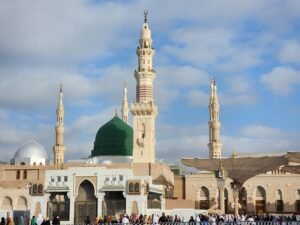
Rabi-ul-Awal holds a place in the hearts of Muslims around the world unlike any other month, for it is in this month that the Prophet Muhammad (ﷺ) was born. For pilgrims travelling from the USA and Canada, choosing to perform Umrah during Rabi-ul-Awal adds a layer of meaning to an already sacred journey, particularly when it comes to standing inside Masjid an-Nabawi, the Prophet’s own mosque in Madinah.
This blog walks you through what to expect when visiting Masjid an-Nabawi during Rabi-ul-Awal, how the atmosphere shifts during this blessed month and how to make the most of your time in the city the Prophet (ﷺ) called home.
Why Rabi-ul-Awal Makes a Visit to Madinah So Meaningful
Every month carries its own blessings, but Rabi-ul-Awal is distinct because of its direct connection to the birth of the Prophet Muhammad (ﷺ), the final Messenger of Allah (ﷻ). Many pilgrims find that walking through the streets of Madinah, praying in the Masjid and standing before the Rawdah during this particular month deepens their sense of connection to the Seerah, the life story of the Prophet (ﷺ).
It is worth noting that Muslims hold differing views on how Rabi-ul-Awal and the topic of Mawlid should be approached, and Umrah Lane respects the full spectrum of these positions. What unites nearly all pilgrims, regardless of where they stand on that discussion, is a shared love for the Prophet (ﷺ) and a desire to send abundant salutations upon him.
عَنْ عَبْدِ اللَّهِ بْنِ عَمْرٍو رضي الله عنهما أَنَّ رَسُولَ اللَّهِ صلى الله عليه وسلم قَالَ: مَنْ صَلَّى عَلَيَّ صَلاَةً وَاحِدَةً صَلَّى اللَّهُ عَلَيْهِ بِهَا عَشْرًا
Narrated by Hz. ‘Abdullah ibn ‘Amr (ر): The Prophet (ﷺ) said, “Whoever sends one blessing upon me, Allah will send ten blessings upon him.”
Sahih Muslim, No. 384
Increasing in Durood and Salawat is one of the simplest and most rewarding acts a pilgrim can carry with them throughout Rabi-ul-Awal, and there is no place more fitting to do so than within the walls of Masjid an-Nabawi itself.
What to Expect: The Atmosphere Inside Masjid an-Nabawi
Rabi-ul-Awal does not carry the same scale of crowding as Ramadan or the weeks surrounding Hajj, which makes it a comparatively calmer month to visit Madinah. That said, pilgrims should still expect the following:
A gentle rise in visitors around the 12th of Rabi-ul-Awal. Many pilgrims specifically time their trip around this date, so expect the Masjid, the surrounding courtyards and the markets of Madinah to feel a little busier than an ordinary month, though still far from the density seen during Ramadan.
A heightened sense of reverence. Pilgrims often describe an unmistakable emotional weight in the air during this month, particularly during the nightly gatherings for dhikr and salawat that take place informally among groups of worshippers in and around the Masjid.
More community activity in the courtyards. It is common to see groups reciting Seerah, discussing the life of the Prophet (ﷺ) or engaging in collective salawat gatherings in the open plazas surrounding Masjid an-Nabawi, especially in the evenings.
Comfortable weather. Depending on where Rabi-ul-Awal falls in the Gregorian calendar that year, Madinah’s climate during this period tends to be mild, making outdoor time in the courtyards and at Jannat ul-Baqi more pleasant than during the peak summer months.
Making the Most of Your Time at Masjid an-Nabawi
1. Book your Rawdah visit early The Rawdah, the section of the Masjid between the Prophet’s (ﷺ) minbar and his blessed grave, requires a timed booking through the Nusuk app regardless of the time of year. During Rabi-ul-Awal, slots can fill slightly faster than usual, so it is worth securing your appointment as early as your travel dates allow.
2. Pray as many of the five daily prayers inside the Masjid as possible Prayer in Masjid an-Nabawi carries an immense multiplied reward, and Rabi-ul-Awal is an especially meaningful time to prioritize this.
عَنْ أَبِي هُرَيْرَةَ رضي الله عنه أَنَّ رَسُولَ اللَّهِ صلى الله عليه وسلم قَالَ: صَلاَةٌ فِي مَسْجِدِي هَذَا خَيْرٌ مِنْ أَلْفِ صَلاَةٍ فِيمَا سِوَاهُ إِلاَّ الْمَسْجِدَ الْحَرَامَ
Narrated by Hz. Abu Hurairah (ر): The Prophet (ﷺ) said, “A prayer in this mosque of mine is better than a thousand prayers in any other mosque except Masjid al-Haram.”
Sahih al-Bukhari, No. 1190 & Sahih Muslim, No. 1394
3. Increase your salawat throughout the day Whether seated in the Masjid, walking through the courtyards or resting at your hotel, use this month to consciously increase how often you send blessings upon the Prophet (ﷺ). Many pilgrims keep a simple tasbeeh or a counting app on hand specifically for this purpose during Rabi-ul-Awal.
4. Visit Jannat ul-Baqi with intention Located just beside Masjid an-Nabawi, Jannat ul-Baqi is the resting place of many of the Prophet’s (ﷺ) companions and family members. A quiet visit here during Rabi-ul-Awal, reflecting on the lives of those closest to the Prophet (ﷺ), adds further depth to the spiritual experience of the month.
5. Set aside time to learn the Seerah, not just visit the sites Rabi-ul-Awal is a natural opportunity to pair your physical visit with study. Many pilgrims use the evenings in Madinah to read or listen to the Seerah, connecting the history of what they are learning to the very ground they are standing on.
A Note on Timing Your Trip
Because the Islamic calendar is lunar, the Gregorian dates for Rabi-ul-Awal shift by roughly ten to eleven days each year. If you are planning a Rabi-ul-Awal Umrah specifically to be in Madinah around the 12th, confirm the current year’s Hijri dates closely to your travel window, as moon sightings can shift the date by a day in either direction.
Practical Tips for Pilgrims Travelling from the USA and Canada
- Book flights and hotel accommodation near Masjid an-Nabawi at least a few months ahead, since demand for the days surrounding the 12th of Rabi-ul-Awal can rise regionally.
- Confirm your Nusuk app registration and Rawdah booking before you travel, not after arrival.
- Pack layers, as Madinah’s evenings can be cool depending on when Rabi-ul-Awal falls that year.
- If travelling with elderly parents, plan prayer times around the Masjid’s quieter hours to make movement more comfortable.
A visit to Masjid an-Nabawi during Rabi-ul-Awal is, for many pilgrims, one of the most emotionally resonant experiences of their journey. Standing where the Prophet (ﷺ) once stood, praying where he once prayed, during the very month of his birth, is a reminder of just how blessed it is to be invited as a guest to these sacred cities.
May Allah (ﷻ) grant you the honor of standing in Masjid an-Nabawi with a heart full of love for His Messenger (ﷺ), accept your prayers and salawat, and grant you the opportunity to return again and again. Ameen.
Ready to Begin Your Umrah Journey?
Umrah Lane Inc.
📍 57 North Street, Suite #401, Danbury, CT 06810, USA
🟢 WhatsApp: +1 (475) 237-9600
📞 +1 (203) 401-8765
📧 info@umrahlane.com
🌐 www.umrahlane.com