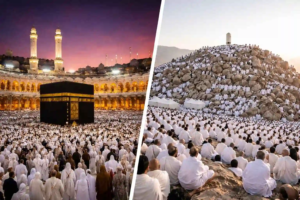
Many pilgrims plan carefully for the Hajj days and give little thought to what follows. Yet the days after Hajj matter just as much. This is when the lessons of the journey either settle into your life or fade.
Hajj 2027 is expected to fall around mid-May 2027, with the Day of Arafah expected near 15 May. Whether you visit Madinah before or after Hajj depends on your package, so check your itinerary early.
What to check:
- Your operator’s plan: how many days in Madinah, and whether you go before or after the Hajj days.
- Entry arrangements for the Rawdah, which are managed through official channels such as the Nusuk app and may change from year to year. Your group leader will guide you.
- Rulings on matters you are unsure about, which your Shaykh or scholar can advise on.
| Stage | What Happens | Key Reminder |
| Madinah visit | Prayers at Masjid an-Nabawi, Rawdah visit, ziyarat | Not a part of Hajj, but highly recommended |
| Departure from Makkah | Tawaf al-Wada’ as your last act | Plan around your flight |
| Journey home | Airport, luggage, gifts, Zamzam | Check airline rules in advance |
| After returning | Rest, gratitude, consistency | Hajj is a beginning, not an ending |
Visiting Madinah: What It Is and What It Is Not
The visit to Madinah is not one of the rites of Hajj, and Hajj is complete without it. Even so, most pilgrims make it a priority, because it is the city of the Prophet (ﷺ) and home to his Mosque.
What to know:
- The focus of the visit is the Mosque, its prayers and its etiquette.
- Many pilgrims spend about eight days in Madinah so they can pray a full set of congregational prayers there. Check what your package includes.
- Treat it as a spiritual retreat, not a sightseeing trip.
The Prophet (ﷺ) said about the virtue of his Mosque:
صَلَاةٌ فِي مَسْجِدِي هَذَا خَيْرٌ مِنْ أَلْفِ صَلَاةٍ فِيمَا سِوَاهُ إِلَّا الْمَسْجِدَ الْحَرَامَ
Narrated by Hz. Abu Hurairah (ر): The Prophet (ﷺ) said, “One prayer in this Mosque of mine is better than a thousand prayers in any other mosque, except Masjid al-Haram.”
Sahih al-Bukhari, No. 1190
Masjid an-Nabawi and the Rawdah
The Rawdah is the area between the Prophet’s (ﷺ) house and his pulpit.
مَا بَيْنَ بَيْتِي وَمِنْبَرِي رَوْضَةٌ مِنْ رِيَاضِ الْجَنَّةِ
Narrated by Hz. Abu Hurairah (ر): The Prophet (ﷺ) said, “Between my house and my pulpit is a garden from the gardens of Paradise.”
Sahih al-Bukhari, No. 1196
What happens:
- Access to the Rawdah is controlled and scheduled, with separate arrangements for brothers and sisters. Follow your group’s instructions and the official process.
- Dress modestly, move calmly and keep your voice low.
- Many pilgrims send salams upon the Prophet (ﷺ) and his two Companions, Abu Bakr and Umar (ر), in a respectful manner. Learn the etiquette from your Shaykh in advance.
Tips:
- Do not push or rush. The Rawdah is crowded, and patience is part of its etiquette.
- If you cannot enter the Rawdah, do not be disheartened. Praying anywhere in the Mosque carries great reward.
- Keep your visit focused on prayer, Dhikr and Qur’an, rather than photography.
Other Places to Visit in Madinah
Guided ziyarat in Madinah are optional, but many pilgrims find them meaningful.
Common visits include:
- Masjid Quba, the first mosque built in Islam.
- The Uhud area, where the Battle of Uhud took place.
- Masjid al-Qiblatayn, associated with the change of the Qiblah.
- Jannat al-Baqi’, the cemetery next to Masjid an-Nabawi.
Tips:
- Visit these places to learn history and reflect, not to seek blessings from the places themselves.
- Ask your guide or Shaykh about correct conduct at each site. Some practices people have picked up are not from the Sunnah.
- Go early in the day to avoid the heat and crowds.
Packing Up and Leaving Madinah and Makkah
Leaving takes more planning than most pilgrims expect.
What to check:
- Your departure schedule. Tawaf al-Wada’ must be your last act in Makkah, so plan around transport times and avoid leaving it to the last hour.
- Weight limits for checked and carry-on luggage. Pilgrims often return with more than they arrived with.
- Zamzam rules. Airlines and airports have specific requirements for carrying Zamzam, so confirm with your airline and operator in advance.
- Gifts and customs rules for your home country.
Tips:
- Pack the night before, and keep your passport, tickets and documents in your hand luggage.
- Leave room for gifts and Zamzam, or consider shipping options if your operator offers them.
- Do not buy more than you can responsibly carry.
The Journey Home
When travelling home, the Prophet (ﷺ) used to say words of gratitude and praise on return from a journey:
آيِبُونَ تَائِبُونَ عَابِدُونَ لِرَبِّنَا حَامِدُونَ
Narrated by Hz. Anas (ر): The Prophet (ﷺ) used to say on returning from a journey, “We are returning, repenting, worshipping, and praising our Lord.”
Sahih al-Bukhari, No. 1797
Tips:
- Make Dua throughout the journey. Travellers’ supplications are valuable.
- Be gracious with airline and airport staff, and with fellow pilgrims. The patience you practised on Hajj still applies.
- Arrive home with humility. A pilgrim who returns with pride has missed something.
Keeping Your Hajj Alive
The test of a Hajj is what happens afterwards. Many scholars teach that one sign of an accepted Hajj is improvement in a person’s conduct and devotion after returning.
Practical steps:
- Keep your five daily prayers on time, in congregation where you can.
- Fix a small daily habit, such as a page of Qur’an, morning and evening adhkar, or regular charity.
- Stay close to people of knowledge and good company.
- Watch your tongue, your temper and your time. The discipline you built in Ihram can continue.
- Settle debts and mend relationships, if you have not already.
The Prophet (ﷺ) said:
أَحَبُّ الْأَعْمَالِ إِلَى اللَّهِ أَدْوَمُهَا وَإِنْ قَلَّ
Narrated by Hz. Aisha (ر): The Prophet (ﷺ) said, “The most beloved of deeds to Allah are those done most consistently, even if small.”
Sahih al-Bukhari, No. 6464
Allah (ﷻ) also promises increase for gratitude:
لَئِن شَكَرْتُمْ لَأَزِيدَنَّكُمْ
“If you are grateful, I will surely increase you [in favour].”
Surah Ibrahim, 14:7
Tips:
- Share what you learned with family, without lecturing. Your example speaks louder.
- Avoid turning the experience into status. Let your conduct do the talking.
- Be patient with yourself. A new habit takes time.
Looking After Your Health
Pilgrims often return tired, and coughs and colds are common after Hajj.
What to do:
- Rest properly in the first week, and drink plenty of water.
- If you have a persistent cough, fever or breathing difficulty, see a doctor and mention that you have recently travelled.
- Restart regular medications and routines, and follow up with your doctor on any concerns.
- Give your body time. Jet lag and exhaustion are normal.
Common Mistakes to Avoid
- Treating the Madinah visit as shopping time rather than worship.
- Leaving Tawaf al-Wada’ until too late to catch your flight.
- Overpacking gifts and ignoring luggage and Zamzam rules.
- Pushing in crowds at the Rawdah.
- Following practices at ziyarat sites without checking they are from the Sunnah.
- Returning home and dropping the habits built on Hajj.
- Ignoring symptoms of illness after returning.
- Treating the title of Hajji as a badge rather than a responsibility.
Quick Reference
- The Madinah visit is not part of Hajj, but it is highly recommended.
- Follow official procedures for the Rawdah, and be patient and respectful.
- Tawaf al-Wada’ is your last act in Makkah, so plan around your flight.
- Check airline rules for luggage, gifts and Zamzam.
- Say the Prophet’s (ﷺ) words of return on your journey home.
- Keep small, steady habits after Hajj. Consistency matters more than intensity.
- Rest, and see a doctor if you feel unwell after returning.
Final Word
Hajj does not end when the flight lands. It continues in how you pray, how you speak and how you treat the people around you. The journey of a few weeks is meant to shape the years that follow.
May Allah (ﷻ) accept your Hajj, forgive your sins, preserve you and your family, and keep you firm upon the path until you meet Him. Ameen.
Ready to Begin Your Hajj Journey?
Umrah Lane Inc.
📍 57 North Street, Suite #401, Danbury, CT 06810, USA
🟢 WhatsApp: +1 (475) 237-9600
📞 +1 (203) 401-8765
📧 info@umrahlane.com
🌐 www.umrahlane.com