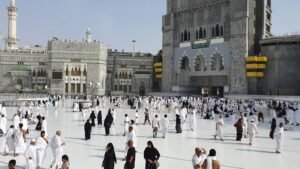
Choosing when to perform Umrah is one of the first questions almost every pilgrim asks, and rightly so. Unlike Hajj, which is fixed to the first ten days of Dhul Hijjah, Umrah can be performed at almost any point in the year. That freedom is a blessing, but it also means the decision is entirely in your hands, and getting it right can shape your entire experience, from the weight of the crowds around the Kaaba to the price of your flight.
This blog is designed to give you a clear, honest, month-by-month comparison so you can choose the timing that suits your health, your budget and your spiritual goals, rather than guessing or relying on scattered advice.
A Note on the Islamic Calendar
Before comparing months, it helps to understand why “best time” is not a fixed answer year after year. The Hijri calendar is lunar and runs roughly 10 to 11 days shorter than the Gregorian calendar. This means Ramadan, Rajab and the months surrounding Hajj shift earlier each Gregorian year, cycling through every season over time.
What to check:
- Confirm the current Hijri month mapping for the Gregorian year you intend to travel, since this changes annually.
- Remember that Gregorian “seasons” (heat, humidity, rainfall) stay fixed to the calendar, while Islamic “seasons” (Ramadan, Rajab, pre-Hajj) move through the calendar.
- Use a reliable Islamic calendar or the Nusuk app to confirm exact dates closer to your travel window, as moon sightings can shift dates by a day.
The Three Factors That Actually Matter
Rather than treating every month in isolation, it is more useful to judge timing against three practical factors.
1. Weather in Makkah and Madinah
Both cities sit in a desert climate with virtually no rainy season to speak of. What changes month to month is the intensity of the heat.
- December to February: The coolest window of the year, with daytime highs generally in the low-to-mid 20s°C and comfortable nights. This is widely considered the most physically comfortable period to perform Tawaf and Sa’i.
- March, April, November: A gentle transition period. Days grow warmer but remain manageable, and this window is often overlooked in favor of the cooler months.
- May and October: Heat begins to build significantly, with daytime temperatures regularly climbing past 35°C.
- June through September: The most extreme heat of the year, with Makkah and Madinah both regularly exceeding 40°C in the afternoon and overnight lows rarely dropping below the high 20s°C. Humidity is generally low, but the sheer intensity of direct sun in the open Mataaf area and along the Sa’i track makes outdoor movement genuinely demanding, especially for elderly pilgrims, young children or anyone with a heat-sensitive health condition.
2. Crowd Levels Inside Masjid al-Haram
Crowd density does not follow the Gregorian calendar. It follows the Islamic calendar, school holiday patterns in different countries and the approach of Hajj.
- Ramadan (all 29 or 30 days): By far the busiest period for Umrah, and increasingly so in the final ten nights, when millions travel specifically to combine fasting, Taraweeh and Umrah in one trip.
- The final month before Hajj (Shawwal through mid-Dhul Qa’dah): Noticeably quieter, as most attention shifts toward Hajj preparation.
- The days of Hajj itself (8th–13th Dhul Hijjah): Umrah is not recommended during this window, as the Haram is at its highest capacity and dedicated entirely to Hajj rituals.
- Weeks immediately following Eid al-Fitr and Eid al-Adha: Moderate to high crowding, as many extend their Eid travel into a pilgrimage.
- Ordinary months outside these windows: Generally calmer, with shorter waits for Tawaf, more space near the Kaaba, and easier access to the Rawdah in Madinah.
3. Cost and Availability
Flights, hotels and Umrah packages are priced dynamically, and the pattern is consistent year after year.
- Ramadan, especially the last ten nights: The highest prices of the year, often several times the off-season rate, alongside the earliest sell-outs for hotels close to the Haram.
- School holiday periods (varying by home country): A secondary price spike, since families travel together during winter and summer breaks.
- The quieter months between Hajj and the following Ramadan: Generally the most affordable window, with greater flexibility on hotel category and flight timing.
Month-by-Month Snapshot (Gregorian Calendar)
This comparison reflects the fixed climate pattern. Remember to overlay it with the current year’s Hijri calendar for crowd and cost considerations.
- December – February: Best weather of the year. Comfortable for extended Tawaf, Sa’i and outdoor Ziyarah. Crowd and cost depend entirely on where Ramadan and Hajj fall that year.
- March – April: Pleasant and still manageable heat. A strong choice when the cooler months are unavailable due to work or school commitments.
- May: Heat starts to climb. Early mornings and late evenings become the more comfortable windows for rituals.
- June – August: Peak heat of the year. Manageable for young, healthy adults who take precautions, but not advisable for the elderly, for pilgrims with heart or respiratory conditions, or for families with very young children.
- September – October: Heat gradually eases. A reasonable option for those who cannot avoid a summer-adjacent travel window.
- November: A quiet, comfortable transition month, often underrated for those seeking a calmer, more affordable Umrah.
Special Consideration: Umrah in Ramadan
No discussion of Umrah timing is complete without addressing Ramadan directly, since it holds a spiritual weight that no other month carries.
عَنِ ابْنِ عَبَّاسٍ رضي الله عنهما أَنَّ النَّبِيَّ صلى الله عليه وسلم قَالَ لِامْرَأَةٍ مِنَ الأَنْصَارِ: “فَإِذَا كَانَ رَمَضَانُ اعْتَمِرِي فِيهِ، فَإِنَّ عُمْرَةً فِيهِ تَعْدِلُ حَجَّةً”
Narrated by Hz. Ibn ‘Abbas (ر): The Prophet (ﷺ) said to a woman from among the Ansar, “When Ramadan comes, perform Umrah in it, for Umrah in Ramadan is equivalent to Hajj.”
Sahih al-Bukhari, No. 1863 & Sahih Muslim, No. 1256
This narration is the reason millions specifically plan their Umrah around Ramadan despite the crowding and cost. For those able to tolerate large crowds, longer queues for Tawaf and premium pricing, the spiritual reward described in this hadith is unmatched by any other time of year. For first-time pilgrims, elderly travelers or those seeking a calmer, more contemplative pace, a quieter month may allow for a more unhurried and spiritually focused experience.
Neither choice is wrong. It is a matter of weighing physical capacity and personal circumstances against spiritual reward, and both paths are deeply blessed.
Quick Reference: Matching the Month to Your Priority
- If comfort and mild weather matter most: aim for December, January or February.
- If spiritual reward is the priority, regardless of crowd or cost: aim for Ramadan, particularly the last ten nights.
- If budget is the deciding factor: aim for the quieter months between Hajj and the following Ramadan.
- If you are traveling with elderly parents or young children: avoid June through August, and avoid the days of Hajj entirely.
- If you want a calmer, more contemplative Umrah with shorter queues: consider November or the weeks just before Ramadan begins.
- If you have performed Umrah before and want a different experience: consider a quieter month you have not yet visited, or the depth of Ramadan if you have not experienced it.
Common Mistakes to Avoid
- Assuming a specific Gregorian month is “always” the best time, without checking where that month falls in the current Hijri calendar.
- Booking a summer trip for elderly relatives without accounting for the physical demands of extreme heat.
- Waiting until the last ten nights of Ramadan to book, when hotel and flight prices are at their absolute peak and availability is extremely limited.
- Planning Umrah during the days of Hajj itself, when the Haram is not accessible for standard Umrah rituals.
- Overlooking the quieter months entirely, simply because they are less talked about online.
Conclusion
There is no single “best” month for everyone. There is only the best month for you, based on your health, your household, your budget and how you personally wish to experience these sacred rituals. Whatever time of year you are able to go, know that being invited to the House of Allah (ﷻ) is, in itself, a profound blessing that not everyone is granted.
May Allah (ﷻ) make your journey easy, whichever month you choose, and accept the Umrah you offer with a sincere and humble heart. Ameen.
Ready to Begin Your Umrah Journey?
Umrah Lane Inc.
📍 57 North Street, Suite #401, Danbury, CT 06810, USA
🟢 WhatsApp: +1 (475) 237-9600
📞 +1 (203) 401-8765
📧 info@umrahlane.com