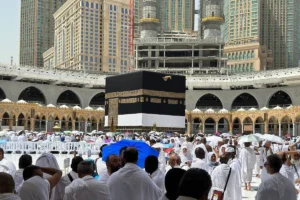
In Part 2 of this series, we looked at the three types of Hajj and how to choose between them. In Part 3, we walk through the Hajj days themselves, one at a time.
For first-time pilgrims, the rituals can feel like a blur of names and places: Mina, Arafah, Muzdalifah, Jamarat. Knowing the order in advance removes much of the anxiety and lets you focus on worship. This blog follows the most common sequence for pilgrims performing Tamattu’, which is the type most travelers from the USA and Canada perform.
A Quick Note Before We Begin
Hajj 2027 is expected to fall around mid-May 2027, with the Day of Arafah expected near 15 May. Treat these dates as estimates, since they depend on moon sighting.
What to check:
- Timings on the ground are coordinated by the authorities and your group’s organizers, particularly movement between Mina, Arafah and Muzdalifah. Your group leader’s instructions come first.
- The rulings below reflect the commonly taught sequence. Your Shaykh or scholar can advise on differences between schools of thought and on your particular situation.
At a Glance
| Date | Main Rituals | Location |
| 8th Dhul Hijjah | Enter Ihram for Hajj, travel to Mina, pray and remain | Mina |
| 9th Dhul Hijjah | Stand at Arafah, then travel to Muzdalifah | Arafah, Muzdalifah |
| 10th Dhul Hijjah | Stone Jamarat al-Aqabah, Hadi, shave or trim, Tawaf al-Ifadah and Sa’i | Mina, Makkah |
| 11th Dhul Hijjah | Stone all three Jamarat | Mina |
| 12th Dhul Hijjah | Stone all three Jamarat, leave Mina before sunset or stay | Mina |
| 13th Dhul Hijjah | Optional: stone again if you remained | Mina |
| Before departure | Tawaf al-Wada’ | Makkah |
Day 1: The 8th of Dhul Hijjah (Yawm al-Tarwiyah)
This is where the Hajj begins.
What happens:
- If you are performing Tamattu’, you enter Ihram again from your accommodation in Makkah, this time with the intention for Hajj.
- Renew your intention, recite the Talbiyah, and travel to Mina.
- In Mina, pray Dhuhr, Asr, Maghrib, Isha and the following Fajr, shortening the four-rak’ah prayers (Dhuhr, Asr and Isha) to two rak’ahs each, without combining them.
- Spend the day and night in worship, Dhikr and rest.
Tips for this day:
- Pack light. Space in Mina tents is limited, and what you carry, you must manage.
- Rest as much as you can. The next day is the most demanding of the Hajj.
- Keep your Ihram restrictions in mind, including avoiding scented products.
Day 2: The 9th of Dhul Hijjah (The Day of Arafah)
This is the pillar of Hajj. The Prophet (ﷺ) said, “Hajj is Arafah,” and without standing at Arafah, there is no Hajj.
What happens:
- After sunrise, travel from Mina to Arafah.
- Pray Dhuhr and Asr together, shortened, at the time of Dhuhr.
- Spend the afternoon in Dua, Dhikr, Istighfar and Qur’an until sunset. Many pilgrims stand, sit, or raise their hands in Dua.
- After sunset, leave for Muzdalifah.
The Prophet (ﷺ) described the greatness of this day:
مَا مِنْ يَوْمٍ أَكْثَرَ مِنْ أَنْ يُعْتِقَ اللَّهُ فِيهِ عَبْدًا مِنَ النَّارِ مِنْ يَوْمِ عَرَفَةَ
Narrated by Hz. Aisha (ر): The Prophet (ﷺ) said, “There is no day on which Allah frees more of His servants from the Fire than the Day of Arafah.”
Sahih Muslim, No. 1348
Tips for this day:
- Stay within the boundaries of Arafah. A pilgrim who is outside them has not stood at Arafah. Pay attention to the markers and follow your group leader.
- Prepare a Dua list in advance, for yourself, your family, your parents and the Ummah.
- Drink water regularly and protect yourself from the sun. Arafah is open and exposed.
- Put your phone away for most of the day. The hours are precious.
Night 2: Muzdalifah
After sunset on the 9th, pilgrims move from Arafah to Muzdalifah.
What happens:
- Pray Maghrib and Isha together on arrival, with Maghrib as three rak’ahs and Isha shortened to two.
- Rest and spend the night under the open sky. This stay is part of the Hajj rituals.
- Pray Fajr early and make Dua after prayer.
- Collect pebbles for stoning, if you have not already. They can be gathered from Muzdalifah or Mina.
Tips:
- You need 7 pebbles for the 10th. If you plan to stay in Mina for the full days of Tashreeq, you will need more for later days. Your group leader will advise on how many to bring.
- Elderly pilgrims, those with health issues, and women traveling with them may be permitted by scholars to leave Muzdalifah after midnight, according to the practice the Prophet (ﷺ) allowed for the weak. Ask your Shaykh in advance.
- Expect basic conditions. There is little privacy and few comforts, so go in with the right mindset.
Day 3: The 10th of Dhul Hijjah (Yawm an-Nahr, the Day of Sacrifice)
This is Eid al-Adha, and the busiest day of the Hajj. Several rituals take place, in the following general order:
- Stoning Jamarat al-Aqabah (the large Jamarah). Throw 7 pebbles, one at a time, saying “Allahu Akbar” with each throw.
- The Hadi. Your sacrifice is performed. Pilgrims performing Tamattu’ or Qiran must offer it. This is usually arranged through your operator, so confirm how and when you will be informed.
- Shaving or trimming the hair. Men are encouraged to shave, which is considered more rewarding, though trimming is permitted. Women trim a fingertip’s length from the ends of their hair.
- Tawaf al-Ifadah and Sa’i. Travel to Makkah, perform Tawaf al-Ifadah, which is a pillar of Hajj, and Sa’i if it is required for your type of Hajj. After this, the remaining restrictions of Ihram are lifted.
After stoning and trimming, most of the Ihram restrictions are lifted, except for marital relations. After Tawaf al-Ifadah, all restrictions are lifted.
The Prophet (ﷺ) said about the reward of a Hajj performed with care:
مَنْ حَجَّ لِلَّهِ فَلَمْ يَرْفُثْ وَلَمْ يَفْسُقْ رَجَعَ كَيَوْمِ وَلَدَتْهُ أُمُّهُ
Narrated by Hz. Abu Hurairah (ر): The Prophet (ﷺ) said, “Whoever performs Hajj for Allah, and does not commit obscenity or transgression, will return as he was on the day his mother bore him.”
Sahih al-Bukhari, No. 1521
Tips for this day:
- Expect enormous crowds around Jamarat and Makkah. Follow your group’s schedule on timing, because the authorities often assign time slots to manage the flow.
- Wear comfortable shoes and keep your hands free.
- Do not rush through Tawaf al-Ifadah because you are tired. It is a pillar of Hajj.
- Keep your Ihram clothing and a change of clothes accessible.
- Eat and drink. This is a physically demanding day, and many pilgrims forget.
Days 4 and 5: The 11th and 12th of Dhul Hijjah (Days of Tashreeq)
These days are spent in Mina.
What happens:
- Each day, after midday (after the time of Dhuhr begins), stone all three Jamarat in order: the small one first, then the middle one, then the large one (Jamarat al-Aqabah).
- Throw 7 pebbles at each, saying “Allahu Akbar” with every throw.
- After the small and middle Jamarat, it is recommended to stop and make Dua.
- Spend the nights in Mina.
On the 12th, pilgrims may choose to leave Mina after stoning, provided they do so before sunset. Allah (ﷻ) says:
فَمَن تَعَجَّلَ فِي يَوْمَيْنِ فَلَا إِثْمَ عَلَيْهِ وَمَن تَأَخَّرَ فَلَا إِثْمَ عَلَيْهِ لِمَنِ اتَّقَىٰ
“Whoever hastens in two days, there is no sin on him, and whoever delays, there is no sin on him, for the one who is mindful of Allah.”
Surah al-Baqarah, 2:203
Tips:
- If you intend to leave on the 12th, you must have left Mina before sunset. If sunset arrives while you are still there, you stay for the 13th as well.
- Many groups assign pilgrims specific times to stone, so follow your leader.
- Stoning on behalf of someone else is only permitted for those who are genuinely unable, and rulings apply. Ask a scholar if this applies to an elderly or ill family member.
Day 6: The 13th of Dhul Hijjah (Optional)
Pilgrims who remain in Mina for the third day of Tashreeq stone the three Jamarat once more after midday, and then depart. Staying is considered more complete, though leaving on the 12th is fully permitted.
Tawaf al-Wada’ (The Farewell Tawaf)
Before leaving Makkah, pilgrims perform a final Tawaf to bid farewell to the Haram.
What to know:
- It is performed as the last act before leaving Makkah.
- Some pilgrims who are menstruating are exempted from it. Confirm with a scholar.
- Avoid scheduling it too early if you have more days left in Makkah. Plan around your departure flight.
Preparing Physically for the Hajj Days
The rituals of Hajj involve long walks, long hours standing, extended time in crowds and heat, and limited rest. Start preparing months in advance.
What to check:
- Begin a daily walking routine now, building up to several kilometers.
- Break in comfortable footwear before you travel.
- Speak to your doctor about your health, medications and recommended vaccinations.
- Practice staying hydrated, and learn the early signs of heat exhaustion.
- Ask your tour operator how the Mina camp, transport and Jamarat schedules will be arranged.
Common Mistakes to Avoid
- Leaving Arafah before sunset without a valid reason.
- Not knowing where the boundary of Arafah is.
- Rushing the Dua on the Day of Arafah.
- Skipping Muzdalifah or leaving without understanding the rulings that apply.
- Attempting all rituals of the 10th in a single day without rest or planning.
- Stoning before the correct time on the days of Tashreeq.
- Leaving Mina on the 12th after sunset without realizing it requires staying another day.
- Leaving Makkah without performing Tawaf al-Wada’.
- Treating the Hajj as a checklist rather than an act of devotion.
Quick Reference
- 8th: Enter Ihram for Hajj and go to Mina.
- 9th: Stand at Arafah until sunset, then spend the night at Muzdalifah.
- 10th: Stone Jamarat al-Aqabah, offer the Hadi, shave or trim, then Tawaf al-Ifadah and Sa’i.
- 11th and 12th: Stone all three Jamarat after midday. You may leave on the 12th before sunset.
- 13th: Optional additional day in Mina.
- Before leaving Makkah: Tawaf al-Wada’.
- Prepare physically, mentally and spiritually well in advance.
Final Word
Hajj is made of simple acts: standing, walking, stoning, praying, turning back to Allah (ﷻ) again and again. It is not meant to be perfect in the way a schedule is perfect. It is meant to be sincere. When the days feel long and the crowds feel heavy, remember why you came.
May Allah (ﷻ) make every step of your Hajj easy, protect you and your family on the journey, forgive your sins, and accept your Hajj as a Hajj mabrur. Ameen.
In Part 4, we will cover what to pack for Hajj and how to prepare for life in Mina and Makkah.
Ready to Begin Your Hajj Journey?
Umrah Lane Inc.
📍 57 North Street, Suite #401, Danbury, CT 06810, USA
🟢 WhatsApp: +1 (475) 237-9600
📞 +1 (203) 401-8765
📧 info@umrahlane.com
🌐 www.umrahlane.com