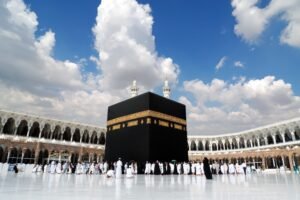
Stepping into Masjid al-Haram or Masjid an-Nabawi for the first time can feel overwhelming in the best possible way. Millions of people from every corner of the world move through the same spaces, performing the same rituals, all season long.
With that many people sharing such a sacred, limited space, small acts of consideration go a long way. Not just for the comfort of those around you, but for your own peace of mind during your worship.
This guide covers the practical etiquette every pilgrim should know, separating genuine adab (Islamic manners) from habits that have simply become common courtesy inside the Haram.
Why Etiquette Matters More Here Than Almost Anywhere
The Haram is not an ordinary crowded space. It is a place where people are actively engaged in worship, often at the most emotionally significant moment of their lives.
A moment of carelessness, a sharp elbow during Tawaf, a raised voice near someone in sujood, can disrupt not just someone’s comfort but their concentration in prayer.
عَنِ ابْنِ عُمَرَ رضي الله عنهما أَنَّ رَسُولَ اللَّهِ صلى الله عليه وسلم قَالَ: الْمُسْلِمُ أَخُو الْمُسْلِمِ لَا يَظْلِمُهُ وَلَا يُسْلِمُهُ
Narrated by Hz. Ibn ‘Umar (ر): The Prophet (ﷺ) said, “A Muslim is the brother of a Muslim. He does not wrong him, nor does he abandon him.”
Sahih al-Bukhari, No. 2442 & Sahih Muslim, No. 2580
That principle of brotherhood is felt intensely inside the Haram, where pilgrims of every nationality, language and background are, quite literally, standing shoulder to shoulder.
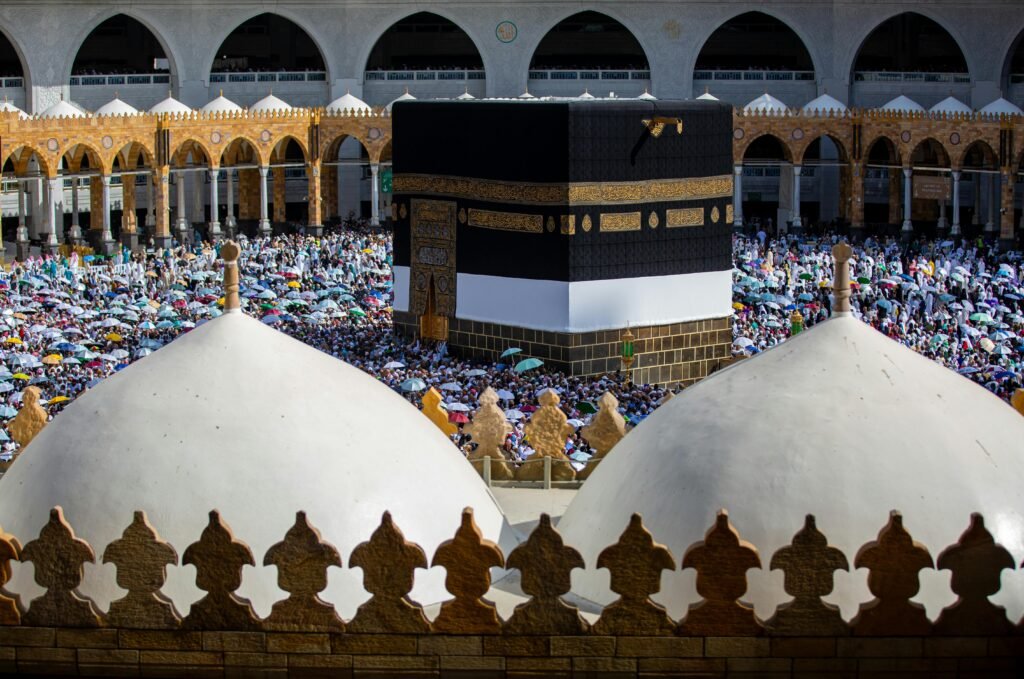
During Tawaf
Do
- Move in the general counter-clockwise flow, keeping a steady, predictable pace so those around you can anticipate your movement
- Choose an outer ring of Tawaf if you are with children, elderly family members, or simply prefer more space and a calmer pace
- Keep your voice at a reasonable volume if reciting dua aloud, so as not to overwhelm the recitation of those nearby
- Be mindful of your bag or camera strap, which can easily catch on someone else in a dense crowd
Don’t
- Push, cut across rows abruptly, or try to force your way toward the Black Stone or Rukn al-Yamani if the crowd is too dense to do so safely
- Stop suddenly mid-Tawaf to take a photo or video, which can cause a ripple effect of people bumping into one another behind you
- Attempt to touch or kiss the Black Stone if it requires physically pushing past others; this is not obligatory and is not worth risking harm to yourself or others
- Bring large bags, tripods or bulky equipment into the Tawaf area
During Sa’i
Do
- Walk at a natural, sustainable pace, especially over the seven circuits between Safa and Marwah
- Use the designated lanes for wheelchairs and those with mobility needs if you or someone in your group requires one
- Stay hydrated throughout, since Sa’i is physically demanding over an extended distance
Don’t
- Weave unpredictably between lanes, which makes it harder for others, particularly those using wheelchairs, to move safely
- Rush people ahead of you who may be elderly or moving more slowly
Around the Prayer Areas
Do
- Leave enough space for those in sujood and ruku to complete their prayer without feeling crowded
- Fill gaps in the row calmly during congregational prayer, rather than squeezing in at the last moment
- Keep your phone on silent, always
- Lower your voice when speaking, even in the courtyards, since many pilgrims are engaged in personal dua or quiet reflection nearby
Don’t
- Step over or in front of someone who is actively praying
- Save large amounts of floor space with mats or belongings for people who are not yet present, particularly during busy prayer times
- Eat or drink inside the main prayer halls, even quietly
Photography
A photo of the Kaaba or the Green Dome is a natural instinct for most pilgrims, but be mindful of when and how you take it.
Do
- Take photos in appropriate moments, ideally when you are not obstructing movement or another pilgrim’s line of sight in prayer
- Ask before photographing other pilgrims directly, particularly women
Don’t
- Take selfies or extended videos in the middle of a crowded Tawaf lane
- Photograph people who are visibly emotional or in a private moment of dua, even if it feels like a beautiful scene
Interacting With Other Pilgrims
Do
- Offer your seat, a bottle of water, or a hand to someone who is elderly, unwell or struggling with the crowd
- Smile and offer basic courtesy even across language barriers; small gestures communicate a great deal
- Be patient with pilgrims who may not be aware of local customs or crowd norms, many are also first-timers
Don’t
- Assume rudeness where there may simply be a language barrier or cultural difference in personal space norms
- Argue or raise your voice over minor inconveniences, such as someone accidentally stepping on your prayer mat
Dress and Modesty
Do
- Dress modestly at all times within the Haram complex, in accordance with the guidelines expected in these sacred spaces
- Carry a spare scarf or shawl, useful for both modesty and the cooler temperatures inside air-conditioned areas
Don’t
- Wear clothing with loud graphics, logos or non-Arabic text that could be considered inappropriate for the setting
- Assume hotel-casual clothing is appropriate for the Haram itself
A Note on Patience
Nearly every etiquette guideline inside the Haram comes back to one underlying value: patience. Crowds will be dense. Someone will step on your foot. A queue will move slower than expected.
These moments are not interruptions to your worship. In many respects, they are part of it.
عَنْ أَبِي هُرَيْرَةَ رضي الله عنه أَنَّ رَسُولَ اللَّهِ صلى الله عليه وسلم قَالَ: لَيْسَ الشَّدِيدُ بِالصُّرَعَةِ إِنَّمَا الشَّدِيدُ الَّذِي يَمْلِكُ نَفْسَهُ عِنْدَ الْغَضَبِ
Narrated by Hz. Abu Hurairah (ر): The Prophet (ﷺ) said, “The strong person is not the one who overcomes others by strength, but the one who controls himself while in anger.”
Sahih al-Bukhari, No. 6114 & Sahih Muslim, No. 2609
Holding onto that composure, even when the crowd is overwhelming or someone is inconsiderate, is itself an act of worship during Umrah.
Quick Reference: Haram Etiquette at a Glance
- Move with the flow of Tawaf; don’t push or cut across rows
- Never force your way to the Black Stone if the crowd is unsafe
- Leave space for those in prayer, and don’t reserve floor space for absent people
- Keep your phone silent and your voice low
- Be mindful and considerate with photography
- Offer help to elderly, unwell or struggling pilgrims
- Dress modestly and carry a spare scarf or shawl
- Choose patience over frustration when the crowd tests you
Final Word
Good etiquette inside the Haram is not a separate set of rules layered on top of worship, it is an extension of it. Every act of consideration toward another pilgrim reflects the same sincerity you bring to your own Tawaf, your own Sa’i, your own dua.
May Allah (ﷻ) grant you ease and grace in the crowd, soften your heart toward every fellow pilgrim you encounter, and accept the worship you offer alongside them. Ameen.
Ready to Begin Your Umrah Journey?
Umrah Lane Inc.
📍 57 North Street, Suite #401, Danbury, CT 06810, USA
🟢 WhatsApp: +1 (475) 237-9600
📞 +1 (203) 401-8765
📧 info@umrahlane.com